en
en fr
fr es
es zh
zh
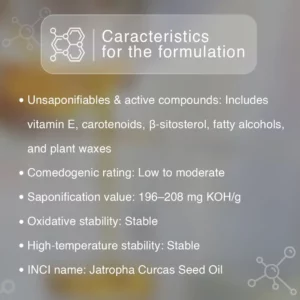
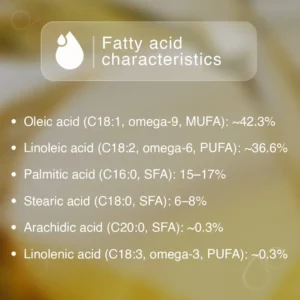
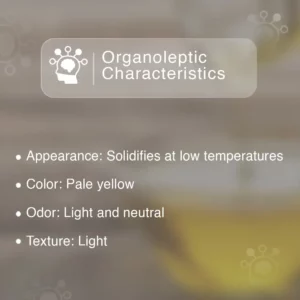
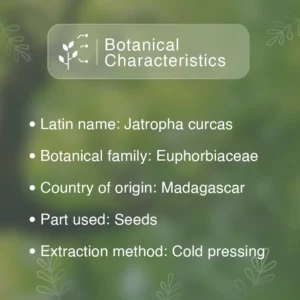
Jatropha vegetable oil possesses the following main properties:





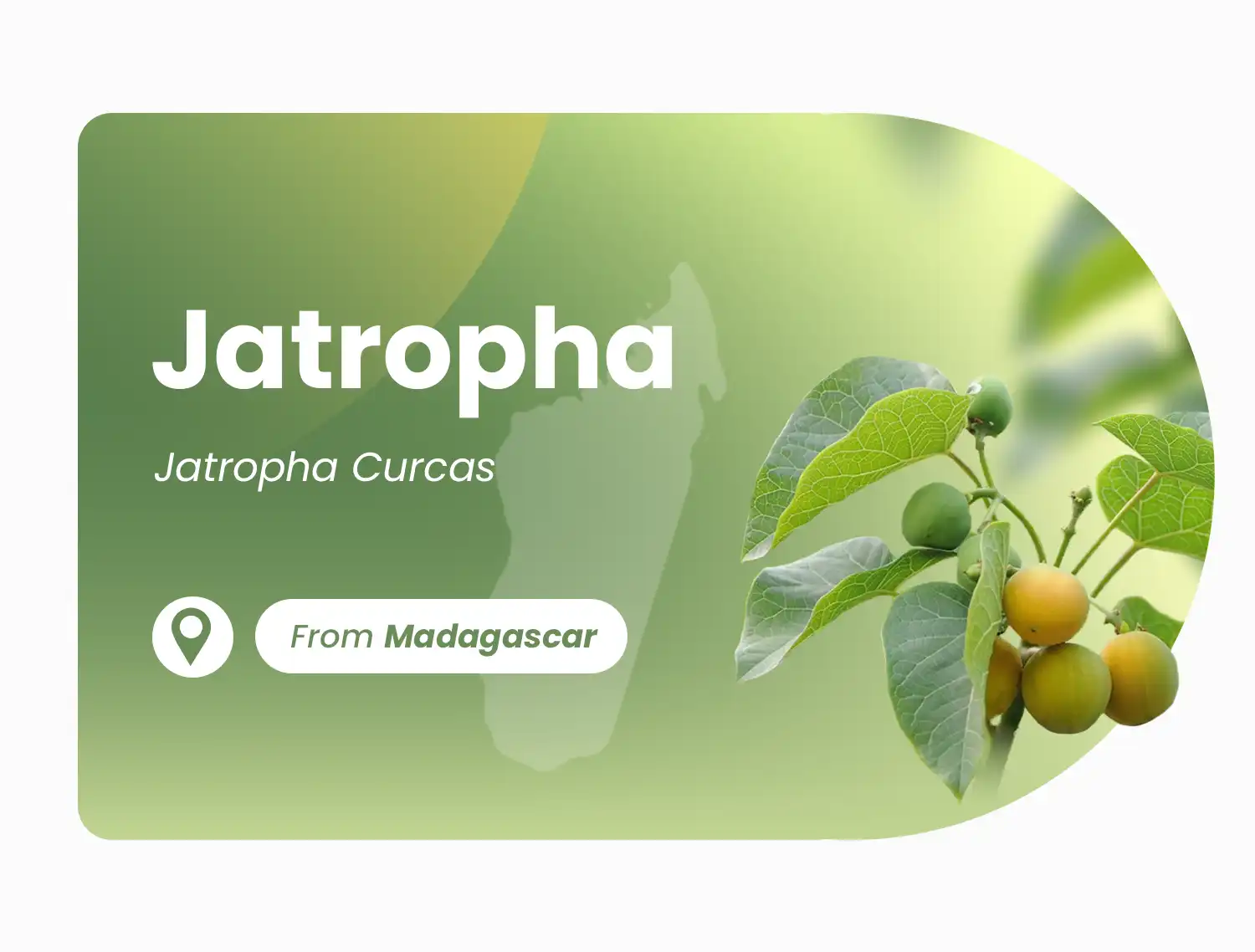
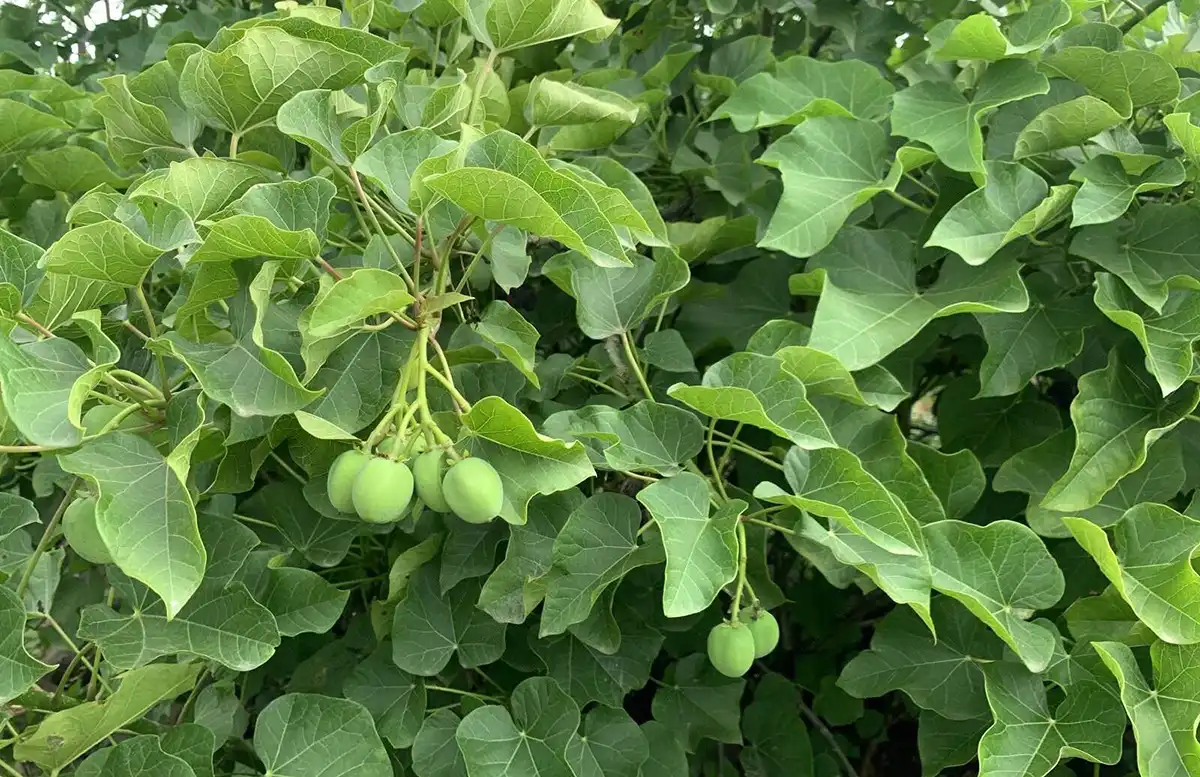
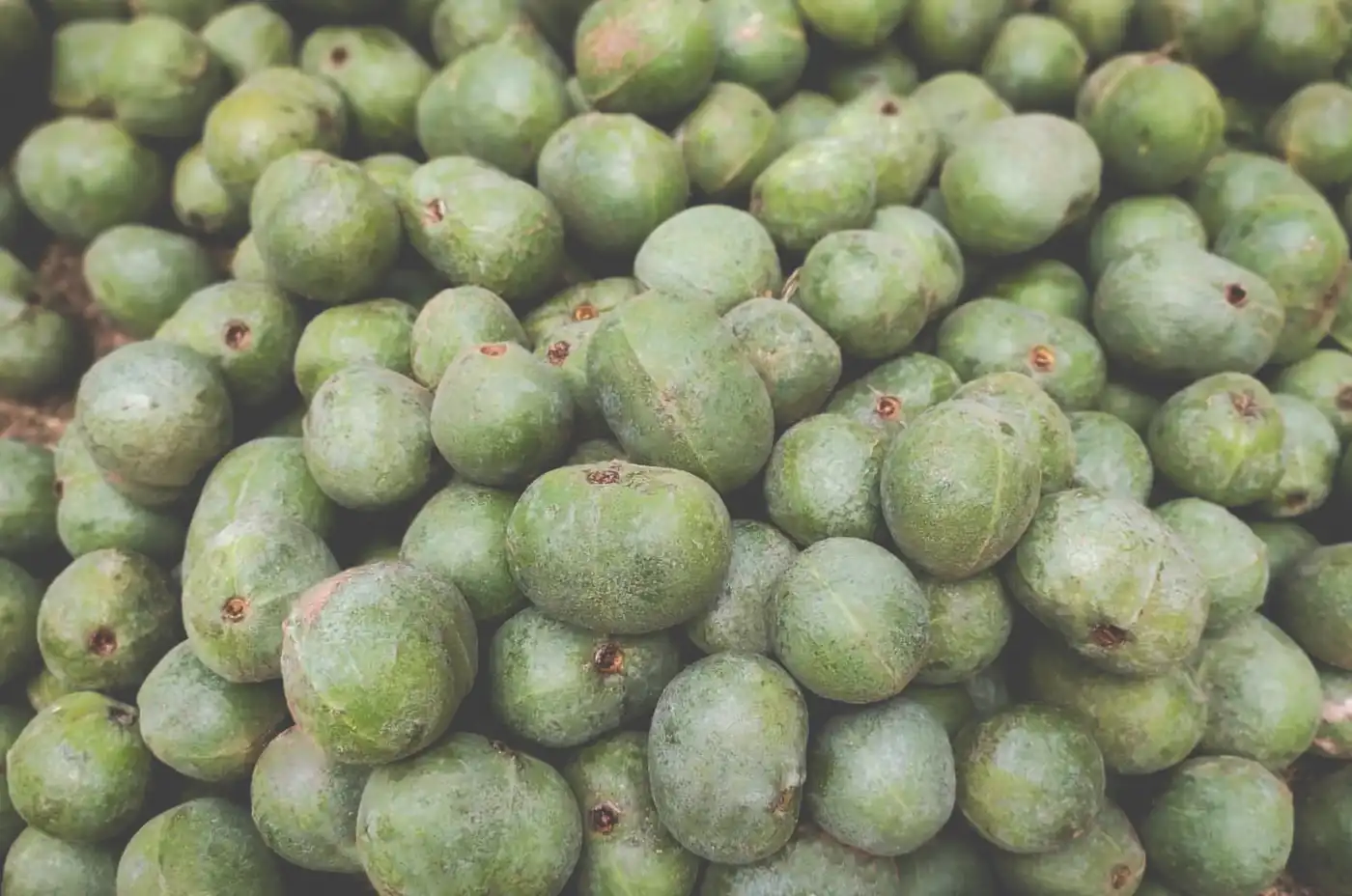
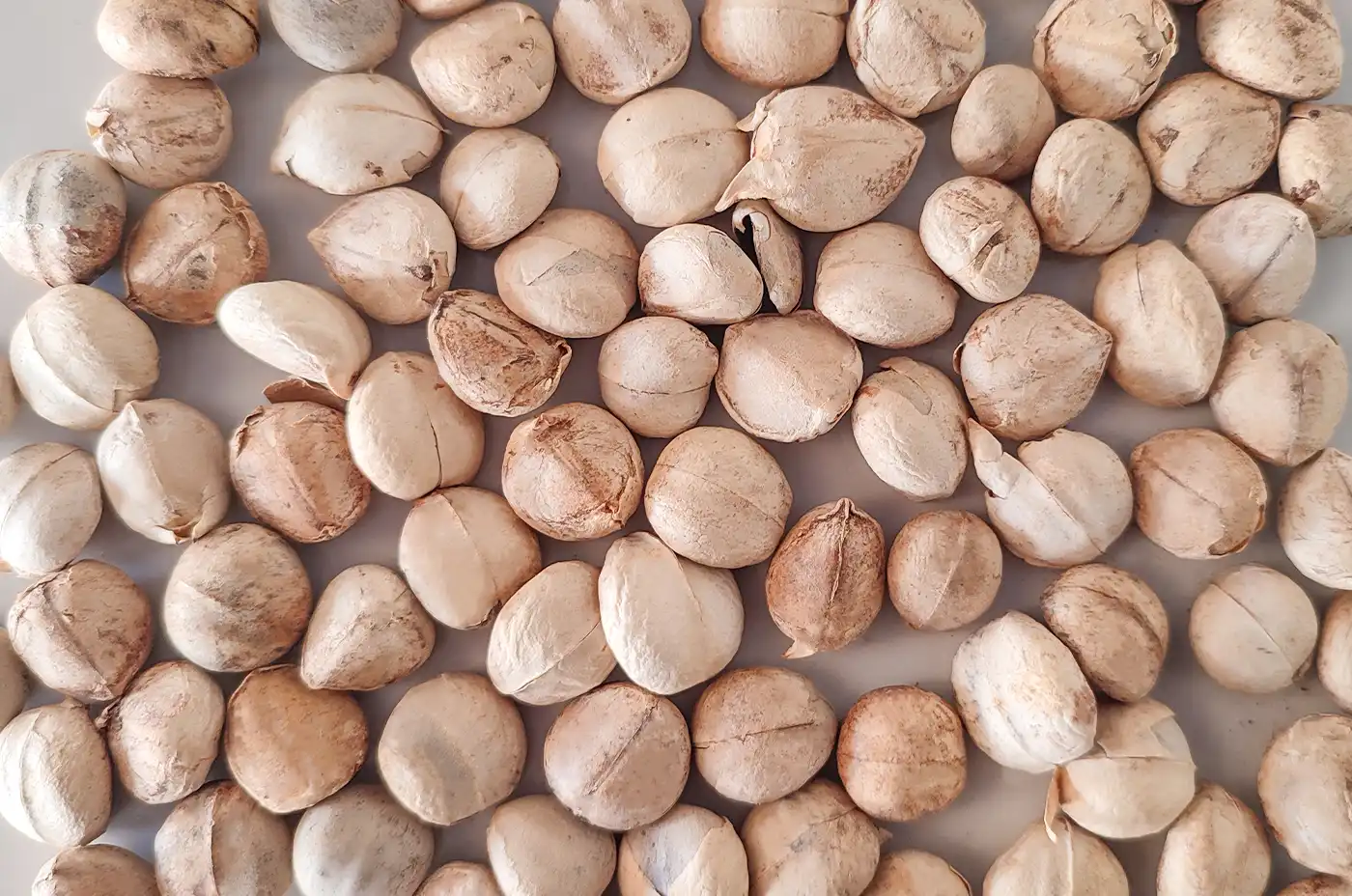
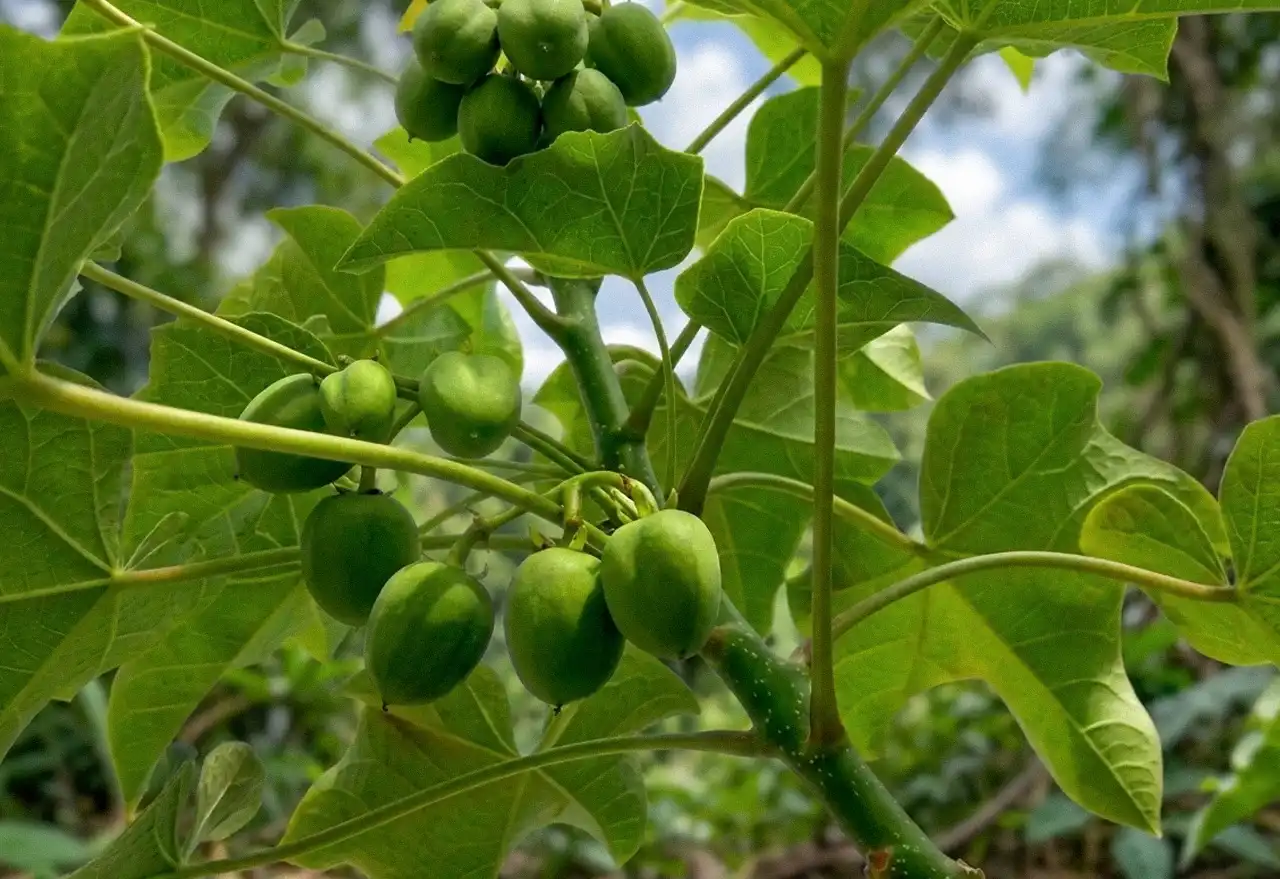
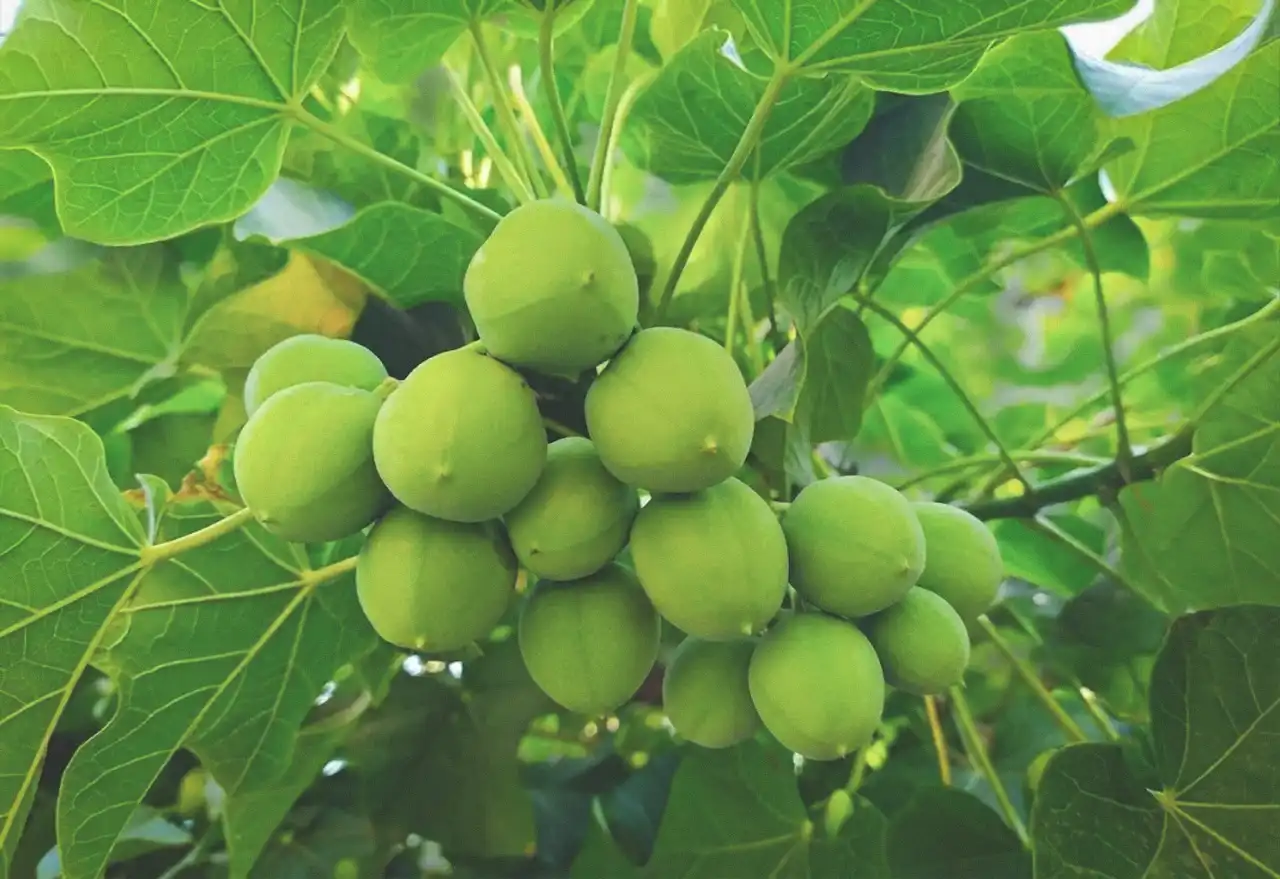
It is possible to export jatropha vegetable oil from Madagascar. Aromeya is a wholesaler of jatropha vegetable oil, distributing it worldwide. The oil is extracted from the seeds of the jatropha tree, which is native to tropical regions. Traditionally, it has been used to make soap and candles. In cosmetics, jatropha vegetable oil is valued for its hydrating and regenerating properties, making it a popular ingredient in creams and lotions.
Jatropha vegetable oil possesses the following main properties:
A good jatropha vegetable oil should exhibit the following characteristics. Feel free to consult your supplier to ensure the quality of your oil.


What are the benefits of jatropha vegetable oil for the skin, and how can it be used?
Jatropha oil deeply hydrates and rejuvenates the skin, making it ideal for dry and irritated skin. To use, apply a few drops directly onto the skin or blend it with your regular moisturizer. Its anti-inflammatory properties also help soothe redness and calm irritation.
How can jatropha oil be used for hair care?
Jatropha oil works well as a nourishing hair mask for dry or damaged hair. Apply the oil generously to the scalp and hair, leave it on for 30 minutes to an hour, then rinse thoroughly and wash with a gentle shampoo. It strengthens hair, reduces split ends, and leaves hair softer and shinier.
What traditional therapeutic uses are associated with jatropha oil?
Traditionally, jatropha oil has been used to treat wounds, burns, and skin inflammations. When applied topically, it supports healing and helps prevent infections thanks to its antiseptic properties. It is also commonly used in massages to relieve muscle and joint pain.
Jatropha vegetable oil possesses the following main properties:
A good jatropha vegetable oil should exhibit the following characteristics. Feel free to consult your supplier to ensure the quality of your oil.
What are the benefits of jatropha vegetable oil for the skin, and how can it be used?
Jatropha oil deeply hydrates and rejuvenates the skin, making it ideal for dry and irritated skin. To use, apply a few drops directly onto the skin or blend it with your regular moisturizer. Its anti-inflammatory properties also help soothe redness and calm irritation.
How can jatropha oil be used for hair care?
Jatropha oil works well as a nourishing hair mask for dry or damaged hair. Apply the oil generously to the scalp and hair, leave it on for 30 minutes to an hour, then rinse thoroughly and wash with a gentle shampoo. It strengthens hair, reduces split ends, and leaves hair softer and shinier.
What traditional therapeutic uses are associated with jatropha oil?
Traditionally, jatropha oil has been used to treat wounds, burns, and skin inflammations. When applied topically, it supports healing and helps prevent infections thanks to its antiseptic properties. It is also commonly used in massages to relieve muscle and joint pain.
Jatropha vegetable oil can be used to moisturize the skin and revitalize the hair, as well as for the production of handmade soaps and biodiesel. It has moisturizing and regenerative properties, making it ideal for cosmetic and therapeutic purposes.
Jatropha vegetable oil deeply moisturizes and helps regenerate the skin, making it ideal for dry and irritated skin. It also has anti-inflammatory properties that can soothe redness and skin irritations.
Jatropha oil can be applied as a hair mask to nourish and revitalize dry and damaged hair. It helps strengthen the hair and reduce split ends, leaving it softer and shinier.
It is moisturizing, regenerating, soothing, and protective, thanks to its richness in essential fatty acids and antioxidant compounds.
Yes, its natural antioxidants help protect the skin from free radicals and maintain elasticity.
It is moisturizing, regenerating, soothing, and protective, thanks to its richness in essential fatty acids and antioxidant compounds.
Yes, its natural antioxidants help protect the skin from free radicals and maintain elasticity.
It is extracted by cold-pressing the seeds of Jatropha cultivated in Madagascar, known for its nourishing and regenerating properties for the skin.
Jatropha vegetable oil is obtained from the seeds of Jatropha curcas, a plant belonging to the Euphorbiaceae family. It is mainly known for its industrial and energy-related applications.
No. Jatropha oil should not be considered a food oil. Certain varieties and their products may contain phorbol esters, compounds that can be highly toxic.
Its main applications are in energy, industrial and oleochemical fields, particularly biodiesel, soap-making and certain technical applications. It must never be used for food purposes.
Yes, but with great caution. It may contribute to softening and conditioning the hair fiber due to its fatty acid content. However, precautions must be taken during application because the oil can be toxic.
Yes. Jatropha is particularly known as a raw material for biodiesel production because its seeds are rich in oil.

Certified Organic
We produce HBBDE certified essential and vegetable oils

Fair trade
Aromeya applies fair trade rules to all our producers

Aromeya in France
Discover the benefits of our 100% natural essential and vegetable oils from Madagascar, available in France at Ecofloral. Offer your skin and well-being exceptional products, directly sourced from the heart of Madagascar.

Tournaire
Aromeya is the distributor and exclusive representative of Aluminum Tournaire packaging in Madagascar